

While it may seem like it is just a software purchase, selecting an ERP system is a choice that dictates how your entire organization operates, and continues operating, for years to come. With the new year on the horizon, the ERP system landscape continues to evolve. Cloud-based options, artificial for users, and solutions that are tailored for specific industries are now the norm rather than an outlier. If the options are overwhelming, it is completely understandable. This article can serve as a starting guide and provide the functional descriptions, as well as the ideal clientele for the top ten ERP systems envisioned for 2025.
What is ERP?
Before we begin the list, it is crucial to define an ERP (Enterprise Resource Planning) system. This should be clarified, as these systems are the digital ecosystems that serve as the central nervous system for the organizations that maintain them. The platform interconnects all the embracing departments, such as finance and sales, as well as the more active and data-heavy units like inventory and human resources. With the right implementation, data silos are removed forever and hands-on, manual activities are reduced, suffering is streamlined, and a new, real-time vision of the entire operation is available.
Come 2025, ERP systems will have evolved out of being simple accounting systems. Current emergent platform options contain a wealth of new modules that include predictive tools, insightful analytical tools that employ artificial intelligence, and are tailored to a mobile experience, allowing managers to make decisions on the go. The worth of the platforms that will be available will lie in the systems and the ways that these will help businesses grow wiser, rather than simply bigger.
What Makes a Great ERP System in 2025?
Great ERP systems have multiple attributes in common. The first is a cloud-native structure. Employees can have access from any device, wherever they are, and there are no complicated downloads or installations. The second is the integration possibilities. Your ERP should integrate smoothly with other tools, such as CRMs, e-commerce, and communication software. The third is the overall user experience. If the software is overly complicated, the employees will not engage with it, and the system will be underutilized. The fourth is scalability. The systems should be able to grow and develop with the business and should not require tedious and painful migrations.
These systems also provide and utilize the best real-time analytics. The system should not only provide and store historical reports but also give actionable insights from the data. The systems with these features made it to the top 10 list for having valuable systems for the 2025 business environment.
The Top 10 ERP Systems for 2025
1. Oracle NetSuite: The Complete Cloud Solution
Having been the first to provide a cloud ERP system, Oracle NetSuite is a versatile provider of business management software, and in 2025, it is still a leader. What makes them particularly unique is their unified approach. Instead of having separate modules for financials, inventory, order management, CRM and e-commerce, their software is designed as a single, integrated system. Consequently, real-time data can flow between any of the departments without the need for complicated integrations, because they don’t need them.

NetSuite shines for increasing mid-market businesses and companies with several subsidiaries and/or international operations. It stands out for the relatively easy way it manages complex financials. The platform’s flexibility means you can begin with core offerings and build on them from there as the business continues to grow. For businesses that need to manage their operations from accounting to customer and relationships on one platform, NetSuite offers tremendous depth and flexibility.
2. SAP S/4HANA Cloud: Enterprise Power with Intelligence
For large and complex businesses, the SAP S/4HANA Cloud is breaking new ground in intelligent ERP. Built on SAP’s super-powerful memory HANA database, the system can manage and analyze data in real-time, and at complex tasks in seconds, something most systems of today find almost impossible. What SAP different is its embedded artificial intelligence that goes beyond automation to predict, recommend, and proactively make tasks.
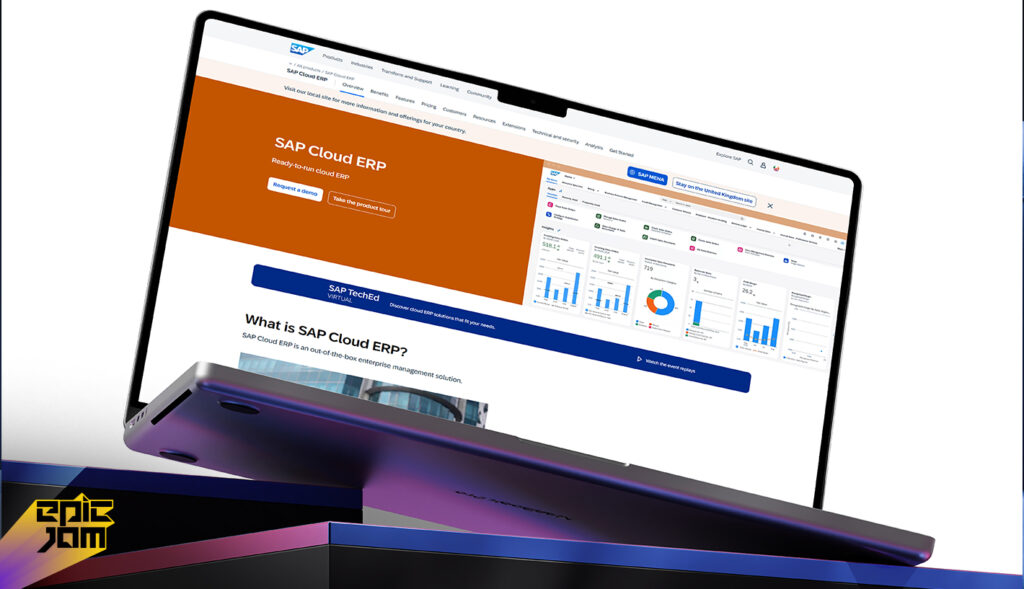
This system is highly useful in complex and large global supply chain models, complex manufacturing, and complex financial consolidation. The out-of-the-box solutions with their specific customizations help manufacture, distributors and service companies to get new functionalities with ease. Planning the implementation can be complex, but the benefits stand out and help to record the tasks and also predict tasks of future tasks, vital in this complex and fast-evolving environment.
3. Microsoft Dynamics 365: Seamless incorporation in the Ecosystem
Microsoft Dynamics 365 works easily and is most useful for companies already part of the Microsoft Ecosystem. This is due to the native integrations with Microsoft 365, Outlook, and Teams and the Azure cloud platform. This results in less training to be done due to employees being already familiar with the platform in use, resulting in higher adoption rates, as employees work in interfaces they already understand.
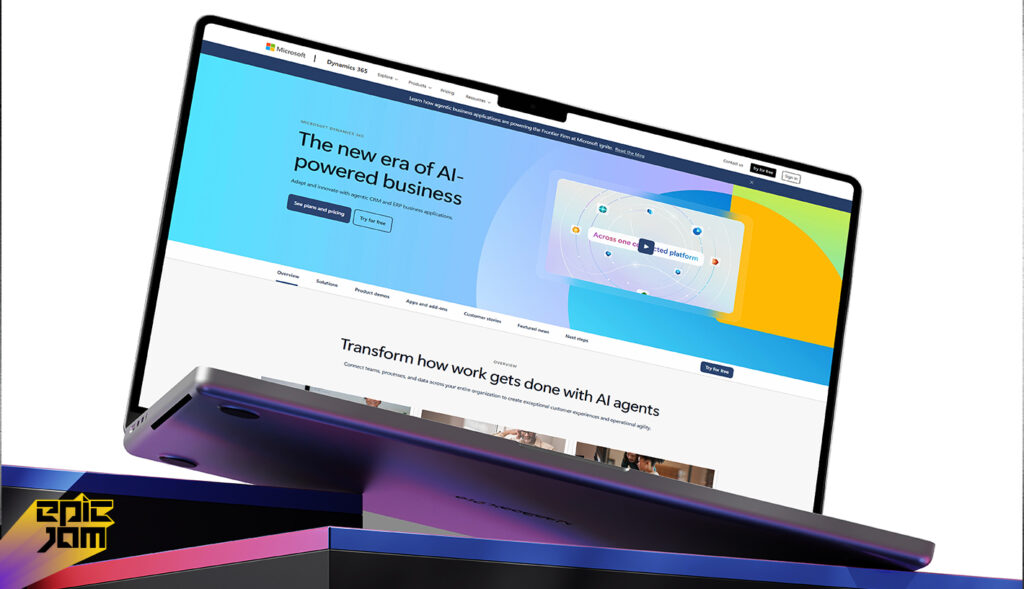
The system is modular in its design, with finance and operations as its core. You can then add any other customer service, sales, and marketing modules at any point and all together, as you can afford. This is useful for mid-market companies as they can lose the ERP system that they can work with and gain the value of the additional Microsoft products, all without being oversold and paying for functionalities that they will never use.
4. Infor CloudSuite: Industry Specific Excellence
Infor is also different in that, instead of a single software with additional modules, they provide CloudSuite products that are tailored to individual industries. Such industries include Manufacturing, Distribution, Healthcare, Hospitality, and more. This also allows for less customisation to occur during implementation, as the software is already designed to be used for the target sector, meaning lower project costs.
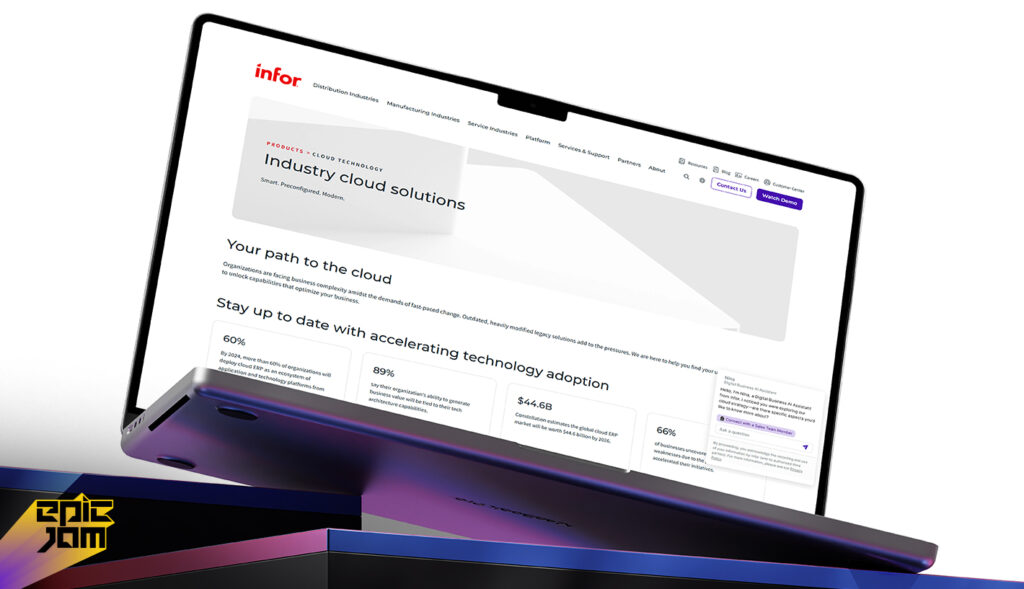
Since they are built on modern cloud infrastructure with consumer-grade interfaces, Infor systems maintain enterprise-level power and strength without enterprise-level complexity. Infor products focus on user experience, so systems can help employees become productive very quickly. Because industry-specific systems functionality is available, the systems solution addresses real, true business problems. Infor provides relevance and efficiency for companies with specialized domains that want an ERP solution that understands their unique challenges from day one.
5. Workday: Human-Centric Enterprise Management
Starting with human capital management and building out from there is how Workday innovated ERP. This human-centric strategy makes it particularly strong for service-based businesses as well as organizations that primarily feature people as assets. The platform integrates seamlessly financial data with workforce data, clarifying how human capital investments impact business objectives.
Continuous innovation is what sets Workday apart. Instead of major version updates that disrupt operations, the system improves constantly with regular updates. Managers can access the platform anytime, from anywhere, because it is intuitive, mobile, and seamless. For businesses that integrate financial operations with workforce management, Workday modernizes the process while placing human capital at the epicenter of business strategy.
6. Sage Intacct: Financial Management Specialization
When it comes to businesses that spend their efforts in crafting and perfecting their financial management skills, Sage Intacct has no bounds. Built for the cloud, this system has the best features for accounting, especially in managing multiple entities, recognizing complex transactions, and creating structured reports. The system’s dimensional accounting system has no parallel for flexible tracking and analyzing.
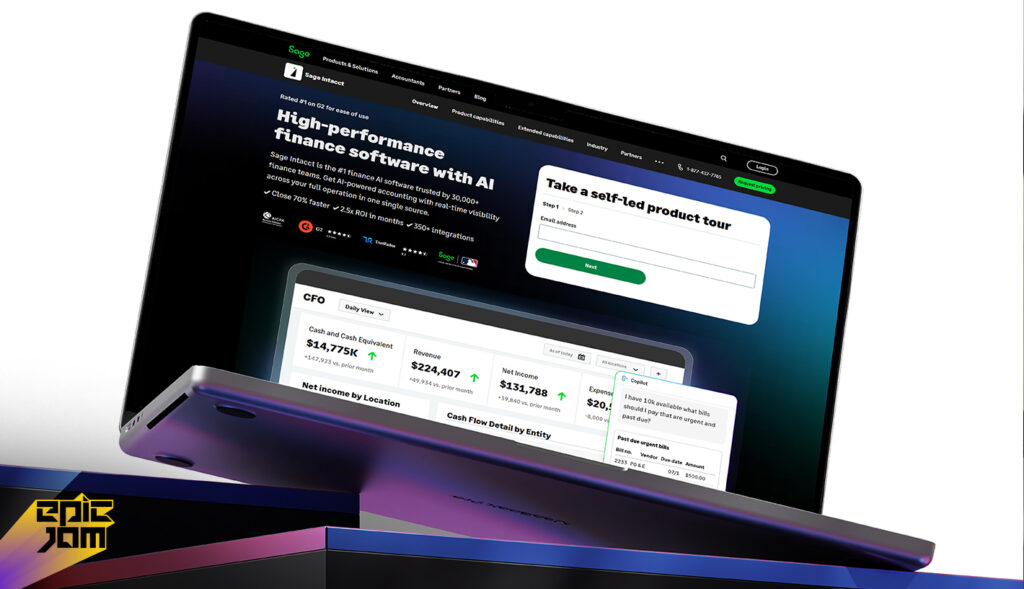
Sage Intacct has no parallel in the financial world when it comes to automation. However, the system’s accuracy is what really sets it apart. Sage Intacct integrates seamlessly with a best-of-breed technology stack. It is ideal for professional services firms, financial services organizations, and any business with complex accounting. Sage Intacct justifies the financial clarity and confidence in business decision-making.
7. Acumatica Cloud ERP: Flexible and Cost-Effective
Acumatica is particularly recognized for its flexible licensing and deployment. There employs a usage-based pricing structure, a departure from the industry-standard model that charges per user, a shift that represents considerable cost savings when a business has many low users or employs automation. Acumatica also differentiates itself by offering a deployment choice – cloud, on-premise, or hybrid.
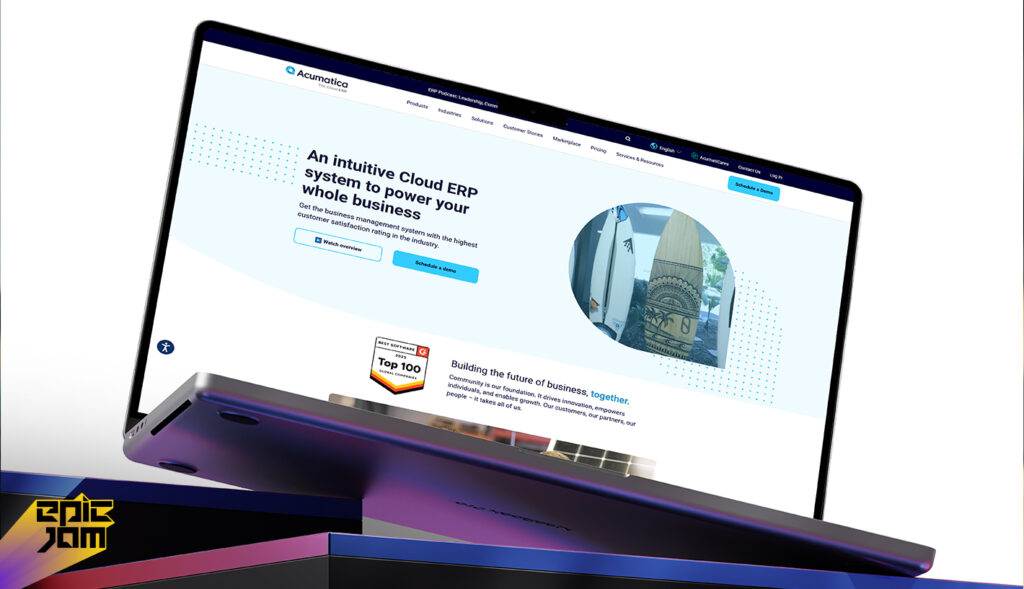
The system has very flexible distribution, construction, and manufacturing capabilities. They can do everything to manage mobile employees, as their system is user-friendly and mobile. They can provide enterprises, at an affordable cost, the flexible and scalable services Acumatica is known for, and the growing services for enterprises that require functionality.
8. Epicor Kinetic: Manufacturing and Distribution Focus
Epicor Kinetic is distribution and manufacturing-focused. It’s built on the cloud.
Epicor Kinetic has decades of knowledge and experience for the distribution and manufacturing industries. The system is built to understand the challenges of selling and making physical goods, as well as the deep functionality of effective production planning, warehouse operations, and supply chain management. The specific capabilities for the manufacturing industries can improve customer service and optimize operations by minimizing waste.
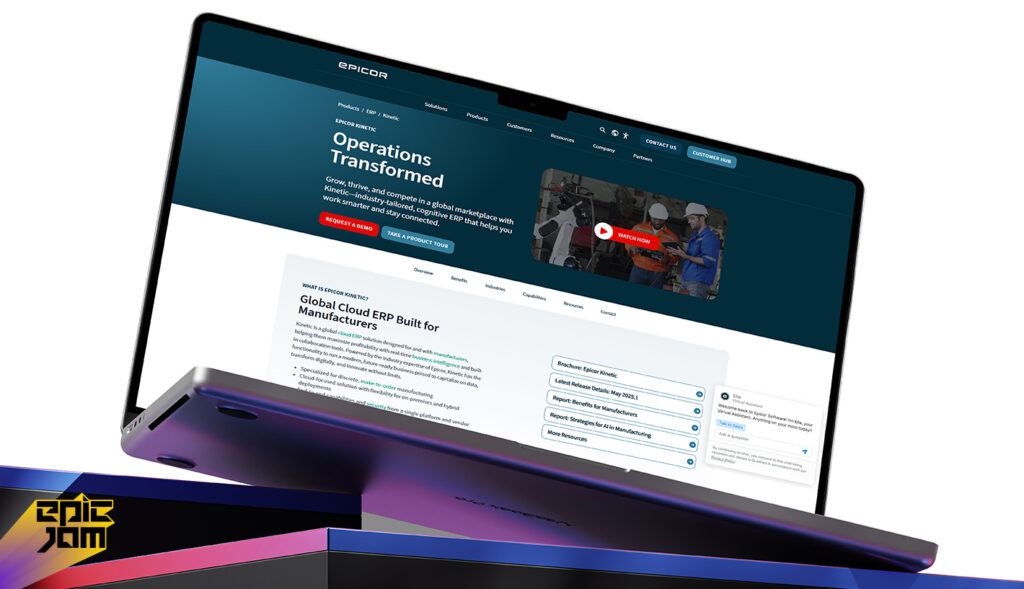
Epicor Kinetic is innovative and practical for the distribution and manufacturing sectors as it provides modern cloud solutions, understands their processes, and speaks their language. The platform has impressive functionality with an interface that is user-friendly for factory workers, but also provides managers with full visibility into operations. It’s deep and powerful, but balanced with usability, making for an effective product.
9. Odoo: Flexible and Cost-Effective
Odoo has an unconventional and flexible approach, considering that they charge a monthly fee due to their open-source business model and focus on attracting all types of customers. Also Odoo has a clear strategy and hundreds of integrated apps that are available from a la carte to a subscription model in fields such as accounting, inventory, website construction, and marketing automation. Due to Odoo’s scaled pricing and monthly contracts, businesses are able to pay as they use and are able to expand semi-uninhibited on their own.
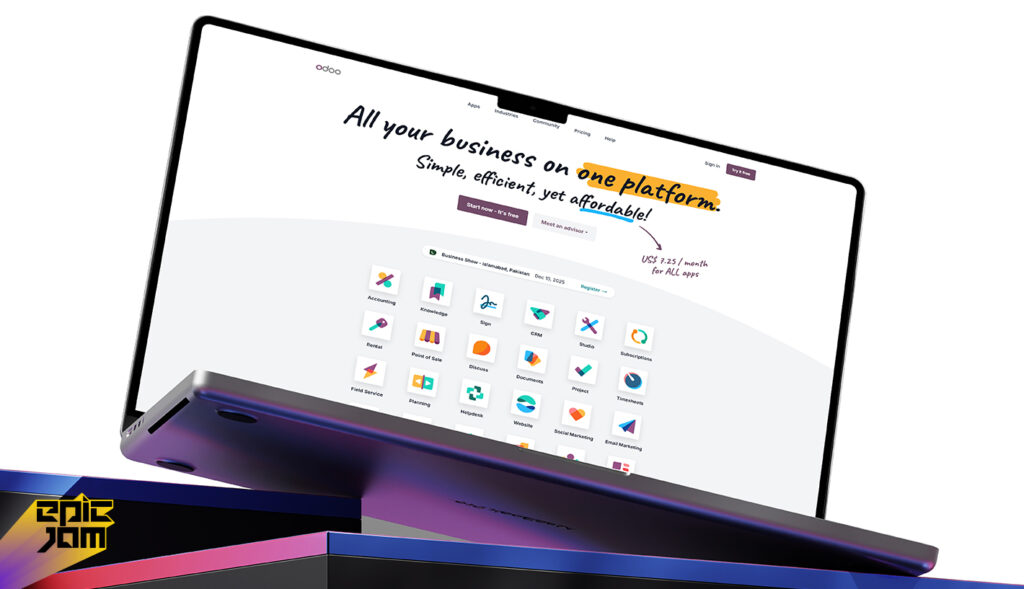
Odoo’s approach is particularly appealing and favours SMBs, and they appreciate Odoo’s open-source community and fully managed customizations in the enterprise version. SMBs will find Odoo’s alternative very appealing to tier-one ERP systems as they offer unparalleled software configurations and pricing.
10. SYSPRO: Targeted Industrial Applications
SYSPRO has taken a more targeted approach to manufacturing and distribution ERP, focusing on more specific industries we now cover to complete our list. In SYSPRO is very functionally deep and offers great performance in individual processes and tasks. It is also very stable and reliable overall. SYSPRO’s deepest production control and quality management also offers advanced supply chain optimizations for discrete manufacturers.
SYSPRO’s offerings stem from experience garnered in dealing with complex manufacturing situations. The accurate management and handling of complex bills of materials and regulatory compliance are some of the features of the system. For industrial businesses requiring dependable functionality and avoiding the clutter of unnecessary functions, SYSPRO provides a solution focused on real manufacturing problems.
Choosing Your Ideal ERP Partner
Assessing the present requirements and future goals is the starting point in determining which ERP system is best for you. Rank features in terms of necessity and desirability. Please take into account the implementation and training resources available for the team, as well as their technical understanding and comfort. Examine the vendor’s implementation approach and support system. Even the most efficient software is rendered useless without seamless and effective implementation.
Remember, the most expensive system is not always the best fit, and the cheapest system is not always the most cost-effective system in the long run. The right system also merges functionality and usability, power and ease, and innovation and predictability into an efficient system. Make use of customer references for your industry, free trials, and demos.
Implementation Best Practices for 2025
In 2025, to have a successful ERP implementation, a strategic methodology will be required. Optimal ERP implementation starts with a clean and well-organized data migration. It would help to incorporate a phased approach, beginning with core functionalities and then moving on to advanced features. Custom training programs per internal user role should be developed and provided. Peer-support champions should be recruited and internalized for user adoption programs.
Firms like Epic Jam have experience and domain competencies from which you can benefit to keep implementation on track and to achieve expected outcomes. Most Important, this undertaking must be seen as a business transformation initiative, not an I/T project, which will require the support of an executive sponsor to achieve cross-functional participation.
| Rank | ERP System | Primary Strength / Best For |
|---|---|---|
| 1 | Oracle NetSuite | Complete cloud ERP with unified real-time data and flexible scalability for mid-market & global businesses. |
| 2 | SAP S/4HANA Cloud | Intelligent ERP with powerful real-time analytics & embedded AI for large enterprises. |
| 3 | Microsoft Dynamics 365 | Seamless integration with Microsoft ecosystem — great for mid-market and familiar UX. |
| 4 | Infor CloudSuite | Industry-specific ERP with pre-configured solutions tailored to sectors like healthcare, distribution & manufacturing. |
| 5 | Workday | Human-centric enterprise management with strong workforce + financial integration. |
| 6 | Sage Intacct | Cloud financial management specialist — excellent automation & dimensional accounting. |
| 7 | Acumatica Cloud ERP | Flexible, cost-effective, consumption-based pricing & deployment options. |
| 8 | Epicor Kinetic | Manufacturing & distribution-focused ERP with strong operations visibility. |
| 9 | Odoo | Modular, open-source ERP platform ideal for SMBs with customizable app ecosystem. |
| 10 | SYSPRO | Targeted industrial ERP with deep manufacturing control & supply chain optimization. |
Future Trends in ERP Technology
As you deliberate upon ERP system design and offerings, you will have to consider the following. From the domain of AI, the ability to exhibit predictive analytics with automated decision-making will be incorporated. Mobile functionality can be expected with most, if not all, tools to support managers on the move. The integration of I 4 provides the linkage of ERP systems to the factory floor and IoT for real-time data and operational insight.
Sustainability tracking has recently gained importance, enabling businesses to assess and communicate their environmental impact. Composable ERP frameworks are beginning to gain popularity, enabling companies to piece together top-of-the-line offerings that fit together and adapt as required. The most advanced thinking systems are incorporating these features, thereby making your investment future-ready.
Having Certainty in Your Decision
The importance of selecting an ERP system is paramount, though it shouldn’t be a burden. Concentrate on identifying a strategy that addresses your most critical business problems, while also offering a springboard to expanded capabilities. Think about the vendor’s innovative, successful, and industry-proficient outlook, as much as the software itself.
The ERP system that is the perfect fit for your business is the one that your employees will actively engage with to enhance operational efficiency. It must streamline intricate tasks, offer data-driven insight for optimal decision-making, and be flexible to your growing business. By analytically evaluating the system with a focus on practical business benefits, rather than a purely technical spec-driven approach, you are likely to get a system that will offer sustained value.
Ready to take the next step but unsure which direction is right for your unique business needs? Let’s take the time to understand your specific challenges and objectives to determine which ERP approach is most likely to yield the highest ROI.
Read Also: What Is ERP Software?
Frequently Asked Questions
Q1) What is the typical timeframe to implement an ERP system?
Implementation timeframes are subject to the level of complexity involved. The individual should expect an ERP implementation to last approximately 3 to 6 months for small to medium-sized businesses for cloud ERP systems. In comparison, larger enterprises should expect 6 to 12 months or more for the more comprehensive deployments.
Q2) What is the actual cost of an ERP system?
With respect to software licensing, the costs associated with implementation services, data migration, and training, as well as system customization and support, should also be considered. For small businesses, costs will average in the lower end of the first year, while for larger enterprises, the average is higher than $500,000 for large deployments.
Q3) Can small businesses realistically expect to derive tangible benefits from ERP systems?
Modern cloud ERP systems have small businesses as an intended target. There are ERP systems that are designed to provide entry to the cloud ERP systems, with the expectation that as the small business scales, costs will remain reasonable. Automation of manual processes will assist small businesses with business insights and growth.
Q4) What measures can be taken to ensure that my team will actually adopt the new system?
The selection process should consider users. Role-specific training will be beneficial, as will appointing an internal champion. Their buy-in and support will be critical to ensure the system is portrayed as one that will assist them in their work rather than make it more complicated.
Q5) What occurs when we outgrow an ERP system?
Current cloud platforms offer systems built with flexibility and scalable. However, if there are constraints within your system, look towards vendors with well-defined migration paths.
Q6) What is the importance of mobile access in the ERP systems of today?
The importance is extremely high. Mobile access is imperative for employees and managers to obtain key data and secure remote approvals. Mobile functionalities have become fundamental for business processes and are not just an option.