


Ever opened an app and felt completely lost? You tap around, but nothing makes sense. That is a bad user experience. Now think of a site that just works. You find what you need. You move through it without thinking. That is good UX design. So what is user experience design exactly? It is the process of shaping digital products so they feel intuitive and helpful. The goal is simple. Make things easy for people to use.
At Epic Jam, we have seen how good UX can turn visitors into loyal users. This post explains how it works.
UX Design: The Simple Version
User experience design is about how people feel when using a product. It covers websites, apps, software, and even smart devices.
A UX designer asks basic questions. What does the user need? What frustrates them? How can we remove those problems?
The answer is usually a product that guides people naturally. No confusion. No extra steps.
UX vs UI: Not the Same Thing
People mix up UX and UI all the time. They are different.
UX design focuses on the whole experience. It is about the journey. Does the signup flow make sense? Can users find what they need? Do they get stuck anywhere?
UI design focuses on the visuals. Buttons, colors, fonts, and layout. It is about how things look.
You need both. A beautiful site that is hard to use will fail. A useful site that looks bad will also struggle. Good UX makes things work. Good UI makes them feel right.
What Does a UX Designer Actually Do?
UX designers wear many hats. They do not just draw screens. They solve problems.
Here is what the work looks like day to day.
User research. They talk to real people. They watch how users behave. They find out what works and what does not.
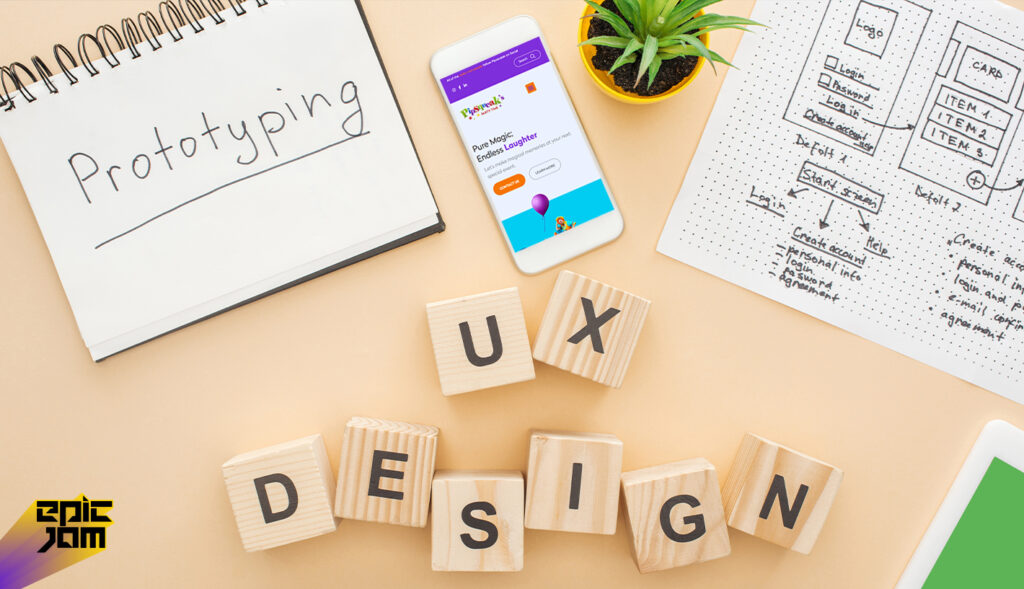
Wireframes. These are basic sketches of a product. No colors or fancy design yet. Just structure.
Prototypes. A clickable version of the product. It looks and feels like the real thing. Teams test it before building anything.
User testing. They watch people use the prototype. Where do they hesitate? What confuses them? This feedback shapes the final product.
Iteration. UX work never really ends. Even after launch, designers watch how people use the product. They keep making it better.
At Epic Jam, we treat design as an ongoing conversation with users. Their behavior tells us what to improve.

The UX Design Process: Five Stages
Most UX teams follow a similar process. It keeps things organized and user-focused.
1. Define the Problem
Start with a clear problem. What are users struggling with? What gap does this product fill? A good problem statement keeps the team focused.
2. Research
Talk to users. Run surveys. Watch how people behave with existing products. Look for patterns. What do they actually do, not just what they say?
Many teams now use tools to analyze feedback. They find trends across hundreds of responses. This helps spot issues you might miss otherwise.
Creating user personas helps here. These are fictional characters based on real data. They represent your target audience. When you design for them, you design for real people.
3. Design Prototypes
Build a simple version of your product. It does not need code. Tools let you connect screens and add basic interactions.
Prototypes save time. You test ideas before spending money on development. If something does not work, you change it fast.
4. Test and Gather Feedback
Watch real users try your prototype. Give them tasks. See what happens.
Common testing methods include:
- Usability testing. Watch users complete tasks. Note where they struggle.
- A/B testing. Show different versions to different users. See which performs better.
- Contextual inquiry. Watch users in their normal environment. How do they naturally interact?
Feedback is gold. It tells you what to fix.

5. Iterate and Refine
Use what you learned. Make changes. Test again.
Even after launch, keep watching. Analytics show where users drop off. Surveys give direct feedback. Social media shows what people say about you.
Good products evolve. They get better over time.
Seven UX Design Principles
These principles guide good design decisions.
User-centric. Build for real people, not yourself. Understand their needs. Amazon recommends products based on what you actually buy. That is user-centric design.
Consistency. Make things predictable. Buttons should work the same way everywhere. Icons should mean the same thing. This reduces confusion.
Hierarchy. Show what matters most. Make important things stand out. Netflix organizes content so you can find shows quickly.
Usability. Keep things simple. Google’s homepage is famously basic. You type and you get results. No extra steps.
User control. Let people undo actions. Gmail lets you unsend an email for a few seconds. That small feature saves stress.
Accessibility. Design for everyone. Consider users with disabilities. YouTube adds captions to videos. This helps many people, not just those with hearing loss.
Context. Think about when and where people use your product. Mobile banking apps use big buttons because users might be walking. They need something easy to tap.
Skills That Help UX Designers
Good UX designers bring a mix of abilities.
Teamwork. You work with developers, managers, and others. Clear communication matters.
Empathy. You need to understand how others feel. What frustrates users? What delights them? Stepping into their shoes is essential.
Creativity. Problems need fresh solutions. Thinking differently helps you stand out.
Problem-solving. Things go wrong. Designs fail. You figure out why and fix it.
Research skills. Gathering insights takes work. Surveys, interviews, testing you need to do them well.
Prototyping. Building quick models of your ideas helps you learn fast.
Business understanding. Design should help the business too. Knowing basic metrics keeps your work aligned with goals.
At Epic Jam, we look for people who combine these skills. Technical ability matters. But understanding humans matters more.
Final Thoughts
UX design is about building things people actually want to use. It starts with understanding users. It ends with products that feel right.
The best designs are invisible. You do not notice them. You just get what you need and move on.
That is the goal. Remove friction. Solve problems. Make things simple.
If you are new to UX, start by watching how people interact with products. Notice what frustrates them. Notice what feels easy. That awareness is the first step.
And if you want to go deeper, tools like Figma help you turn ideas into something real. You sketch, you test, and you improve. That cycle never stops.
At Epic Jam, we believe good design is honest design. It respects the user’s time. It solves real problems. And it keeps getting better.
Read Also: UI vs. UX Design: What’s the Difference?
Frequently Asked Questions
Q1) What is the main goal of UX design?
The main goal is to make products easy and satisfying to use. Remove friction. Help users accomplish what they came to do.
Q2) Do I need coding skills for UX design?
No. Many UX designers do not code. But understanding basic technical limits helps you work better with developers.
Q3) How is UX different from customer service?
UX happens before and during use. Good design prevents problems. Customer service handles problems after they happen.
Q4) Can small businesses benefit from UX?
Yes. Any site or app with users can improve. Better UX means happier customers and more sales. It matters for everyone.
Q5) How long does the UX process take?
It depends on the project. Simple fixes might take days. Full redesigns can take months. The key is testing early and often.